The Best Low-Acid CBD Coffee for GLP-1 and Ozempic Users
If you're on semaglutide (Ozempic, Wegovy) or tirzepatide (Mounjaro, Zepbound) and your morning coffee suddenly feels like a bad idea, you're not imagining things. GLP-1 medications change the way your stomach works, and regular coffee can hit harder than it used to. Here's what's actually happening, and why a low-acid CBD coffee may be a gentler fit for your routine.
Why GLP-1 Medications Make Regular Coffee Feel Different
GLP-1 receptor agonists slow gastric emptying, the rate at which your stomach moves its contents into your small intestine. That's part of how they work. But it also means that everything you drink, including coffee, sits in your stomach longer than it normally would. Studies suggest caffeine absorption may take 20 to 30 percent longer on these medications, and effects can linger well beyond what you're used to.
The downstream effects are real. Clinical trials for Wegovy (semaglutide 2.4 mg) showed nausea in up to 44 percent of patients. For tirzepatide (Zepbound), GI adverse reactions were reported in about 56 percent of participants. These aren't rare edge cases, they're among the most common reasons people struggle to stay consistent with GLP-1 therapy. And coffee, with its acidity and caffeine stimulating gastric acid secretion, can amplify exactly those symptoms when digestion is already slowed.
Coffee also relaxes the lower esophageal sphincter, the valve that keeps stomach acid where it belongs. Pair that with a stomach that's slow to empty, and you've got conditions that can make acid reflux and morning nausea noticeably worse, especially during the first weeks of dose escalation.
The Low-Acid CBD Coffee for GLP-1 Users Difference
Not all coffee is equally acidic. The pH of standard hot-brewed coffee typically falls between 4.85 and 5.10. Cold brew, by comparison, registers closer to 5.8 to 6.2, meaningfully less acidic because the cold extraction process doesn't draw out the same harsh organic acids that hot water does. Lighter roasts tend to retain more acid; darker and medium roasts, processed more slowly, break down some of those compounds over time.
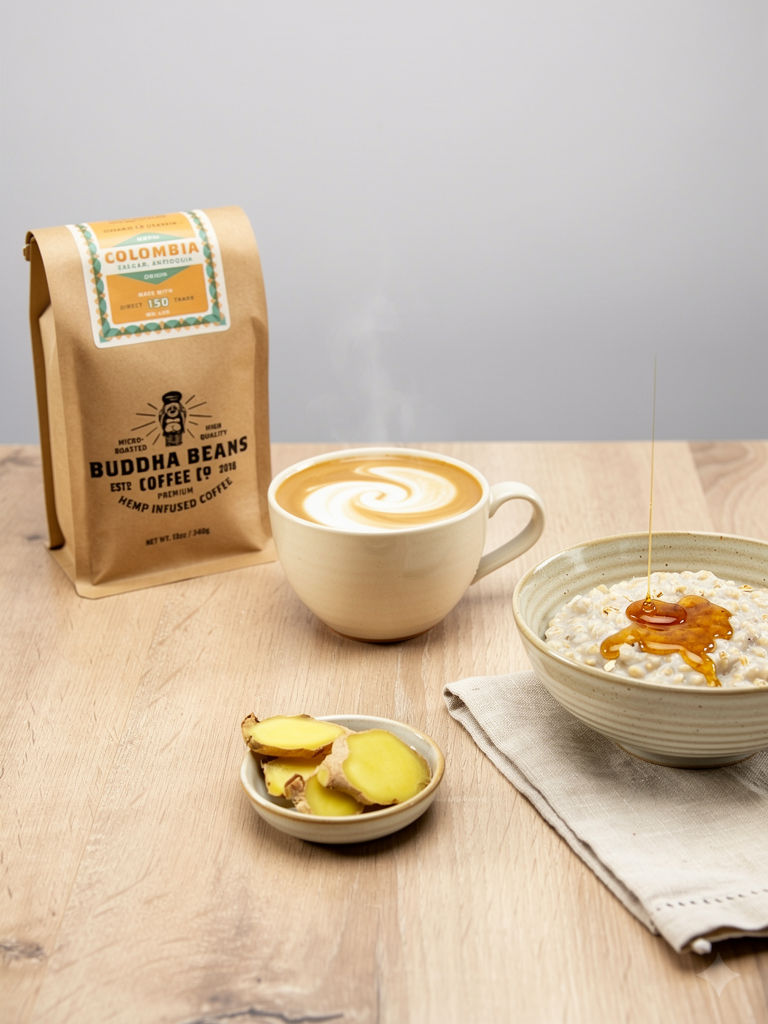
At Buddha Beans, our organic Mexico single-origin and Colombia Decaf CBD coffees are crafted with this in mind. Medium roast profiles, smooth low-acid bean varietals, and a proprietary infusion process that works the CBD directly into the bean, not dusted onto the grounds after the fact. The result is a cup that's easier on the stomach from the first sip.
CBD doesn't make the coffee less effective. It doesn't mute the flavor. What many people find is that it takes some of the edge off the stimulant side of caffeine, the kind of edge that, when your digestion is already working overtime, can turn a pleasant ritual into an uncomfortable one.
What CBD Actually Does (and What We Won't Claim)
Let's be straightforward here. CBD is a non-intoxicating cannabinoid derived from hemp (Iffland and Grotenhermen, 2017). It interacts with the endocannabinoid system, which plays a role in regulating mood, stress response, and various physiological processes. Many people who incorporate CBD into their mornings report feeling more settled, less jittery, and more able to ease into their day. We think that matters, especially when your body is adjusting to a new medication.
What we won't tell you is that CBD treats nausea, resolves GI symptoms, or works as a therapeutic intervention for anything related to GLP-1 medications. That would be overclaiming, and it wouldn't be honest. What we can say is that a lower-acid, organically grown, carefully roasted cup of coffee, with CBD as part of a broader wellness routine, is a meaningful upgrade from a standard cup that isn't doing your stomach any favors right now.
All of our hemp is USDA Certified Organic, sourced from farms in Colorado and Oregon. Our infusion process bonds the CBD directly to the bean before roasting, which means you're not getting a topical dusting that uneven dosing and falls to the bottom of the bag. Every cup brews consistently.
Our Recommended Coffees for GLP-1 Users
Mexico Organic CBD Coffee, Low-Acid, Medium Roast
Our Mexico single-origin comes from shade-grown farms in the Chiapas highlands, where Arabica plants grow at 1,200 to 1,750 meters under a natural forest canopy. This elevation and environment produce a naturally lower-acid bean with a smooth, well-rounded body. The medium roast further tempers any brightness, landing in a cup with notes of milk chocolate, caramel, and a subtle nuttiness that finishes clean.
For GLP-1 users, this is the go-to. It's not stripped of character, it's just not fighting your stomach. Brew it a little stronger than usual if your appetite is suppressed and you want something more satisfying in a smaller volume. It holds up to milk, oat milk, or a splash of cream without losing its flavor profile.
If you're exploring the difference between CBD-infused coffee options, our guide to CBD coffee basics covers how the infusion process works and what to expect from your first bag.
Colombia Decaf CBD Coffee, Full Flavor, Zero Caffeine Amplification
Caffeine sensitivity is one of the more surprising side effects people notice on GLP-1 medications. Because gastric emptying slows, caffeine enters the bloodstream more gradually, but the total exposure doesn't decrease. Many users find the effects linger longer than expected, and some find that evening sensitivity to sleep disruption goes up even with a cup taken in the morning.
Our Colombia Decaf CBD is Swiss Water Process decaffeinated, no chemical solvents, no residual taste. It keeps the complexity of a single-origin Colombian cup: bright stone fruit, a touch of brown sugar, medium body. The CBD infusion is the same as in our caffeinated blends. If you want the ritual and the calm-focused compound without the caffeine component, this is the one.
It's also worth considering for afternoon brewing when you want something warm and grounding without disrupting the medication's appetite-related effects on your evening meal schedule. For a deeper look at decaf options, see our decaf CBD coffee guide.
Timing and Brewing: Small Adjustments That Help
When you're on a GLP-1 medication, the timing and method of your coffee matters more than it did before. A few things worth trying:
Drink coffee with food, not before it. Brewing on an empty stomach amplifies the acid load on a stomach that's already moving slowly. Even a few bites of something neutral beforehand, a piece of toast, a handful of crackers, can make a noticeable difference.
Try cold brew. Our CBD coffee grounds work well for cold brew preparation, which produces a cup that's 30 to 50 percent less acidic than hot-brewed coffee. If nausea is your main issue, this is worth testing before writing coffee off entirely.
Keep the cup size modest. One of the effects GLP-1 medications have is reducing appetite and the desire for large portions of anything. A six-ounce cup brewed slightly stronger will give you the ritual and the compounds without flooding a slow-emptying stomach.
Watch the add-ins. Sugary syrups, heavy cream in large amounts, and high-fat creamers all slow digestion further. A splash of oat milk or a light milk option tends to sit better during the dose-titration period.
Why Organic Matters More When Your Digestion Is Sensitive
This is a point that gets overlooked. Commercial-grade coffee can contain mycotoxins, fungal compounds that develop during improper storage or processing of lower-grade beans. For a healthy digestive system, this is usually a non-issue. But when gastric emptying is slowed and your gut is processing everything more gradually, impurities that might otherwise pass through quickly have more time to create irritation and bloating.
Every bag of Buddha Beans coffee starts with USDA Certified Organic beans, sourced from verified farms, and roasted fresh in Los Angeles in small batches. Our hemp is also certified organic. The goal is a clean cup, nothing added that shouldn't be there, nothing that adds unnecessary burden to a digestive system that's already working differently than it used to.
You can read more about our sourcing and roasting process in our sourcing overview.
Frequently Asked Questions
Can I drink coffee while taking Ozempic or Wegovy?
Yes. There's no direct drug interaction between coffee and semaglutide. The issue for most people isn't the drug-coffee interaction, it's the way GLP-1 medications slow gastric emptying, which makes the stomach more sensitive to coffee's acidity and caffeine stimulation. Switching to a low-acid option, drinking coffee with food rather than on an empty stomach, and moderating intake (one to two cups rather than three or four) are the most common strategies that help.
Is CBD coffee safe to drink on GLP-1 medications?
There's no known interaction between CBD and semaglutide or tirzepatide. As with any supplement added to a medication routine, it's worth mentioning to your prescribing physician, not because there's a documented concern, but because keeping your care team informed is always good practice. Our CBD doses per serving are moderate and consistent, which makes it easy to report what you're taking.
Why is low-acid coffee better for GLP-1 users specifically?
Because slowed gastric emptying increases stomach acid exposure and the likelihood of reflux. Coffee's acidity and its effect on the lower esophageal sphincter compound that. A lower-acid coffee reduces the acid load on a stomach that's already working under new conditions. It's not a cure for GLP-1 GI side effects, but it's a meaningful adjustment that many users find helps them keep coffee in their routine during dose titration.
What's the difference between CBD infused into the bean versus sprayed on the grounds?
Most CBD coffees on the market apply CBD oil to the surface of already-roasted grounds, the compound sits on the outside of the particle and can settle unevenly. Buddha Beans uses a proprietary process that infuses CBD into the bean itself before roasting. The result is more consistent distribution, and you're not losing most of your CBD to the bottom of the bag or the surface of the filter.
What if I'm also watching calories and protein on my GLP-1 plan?
Black CBD coffee is essentially zero calories. Our recommended brewing methods, drip, French press, cold brew, add nothing unless you add something. If you're working with a nutritionist or following a protein-forward eating plan alongside your medication, coffee in its base form doesn't interfere. Add protein-based creamers if you want to get some nutrition into a light morning cup when appetite is low.
What This Means
GLP-1 medications are changing how a lot of people relate to food, appetite, and their daily routines. Coffee doesn't have to be a casualty of that shift. A low-acid, organically grown, CBD-infused cup, brewed thoughtfully, timed well, can stay part of your morning without compounding the GI challenges that come with dose escalation.
Our Mexico Organic and Colombia Decaf CBD coffees are the place to start. Roasted fresh in Los Angeles, sourced from certified organic farms, and infused with USDA Organic Colorado and Oregon hemp. If you've been struggling with your regular coffee since starting a GLP-1 medication, we'd genuinely suggest giving one of these a try before deciding coffee isn't working for you anymore.
Shop low-acid CBD coffee at buddhabeanscoffee.com and if you have questions about which option fits your routine, reach out. We're happy to help you find the right one.
These statements have not been evaluated by the Food and Drug Administration. This product is not intended to diagnose, treat, cure, or prevent any disease.
Shop CBD Coffee
Keep Reading