GLP-1 Support: Best Low-Acid CBD Coffee for Tirzepatide, Wegovy & Ozempic Users
If you are managing your weight or blood sugar with a GLP-1 receptor agonist like Ozempic, Wegovy, or Mounjaro, you already know the morning routine can feel like a negotiation with your own stomach. Nausea, bloating, and acid sensitivity are among the most commonly reported side effects of semaglutide and tirzepatide therapy, and coffee, a daily ritual for millions of people, can suddenly feel like the enemy. But it does not have to be that way.
At Buddha Beans Coffee Co., rooted in the heart of Los Angeles and serving specialty coffee lovers across Southern California and beyond, we have spent years perfecting a category of coffee that happens to be ideally suited for GLP-1 users: low-acid CBD-infused coffee. This post covers what the science says about GLP-1 medications and digestion, why conventional coffee aggravates those symptoms, and how what CBD coffee is can make your morning cup gentler, smoother, and more enjoyable again.
How GLP-1 Medications Change Your Relationship with Food and Coffee
GLP-1 receptor agonists work by mimicking the glucagon-like peptide-1 hormone that your gut naturally releases after eating. These medications bind to GLP-1 receptors in the pancreas, brain, and gastrointestinal tract. One of their primary mechanisms is the significant slowing of gastric emptying, the rate at which food and liquid move from your stomach into the small intestine.
When gastric emptying slows, several things happen at once. You feel full faster and stay full longer, which is the intended effect for appetite control. But your stomach also holds onto everything you consume for an extended period, including acids, gas, and the irritants naturally present in coffee. This is why so many semaglutide and tirzepatide users report that foods and beverages they once tolerated without issue suddenly cause nausea, reflux, or abdominal discomfort.
Standard coffee compounds this problem in multiple ways. Conventional roasts contain hundreds of acids, including chlorogenic acids, quinic acid, and citric acid, that directly stimulate gastric acid secretion. Caffeine itself relaxes the lower esophageal sphincter, the valve that separates the stomach from the esophagus, making acid reflux more likely (Boekema GI). When those acids have nowhere to go quickly because gastric emptying has slowed, the result is often prolonged discomfort that no GLP-1 user needs added to their morning.
Why Low-Acid Coffee Matters for People on Semaglutide
The phrase "low-acid coffee" gets used loosely in the market, so it is worth being precise. True low-acid coffee achieves its gentler profile through a combination of origin, altitude, roast level, and processing method. Beans grown at lower elevations in volcanic soils, like those from Mexico and certain Colombian regions, tend to develop with lower inherent acidity. Slower, medium-to-dark roasting further breaks down chlorogenic acids, reducing the acid load of the final cup by a meaningful margin.
For someone on coffee and semaglutide, this distinction is not academic. Lowering the acid content of your morning brew means less irritation to a stomach that is already working harder to process everything it holds. Explore our low-acid CBD coffee options to see how origin and roast choices translate directly into a more comfortable cup.
A lower-acid coffee is also gentler on tooth enamel, which can be a secondary concern for GLP-1 users who experience acid reflux with any regularity. The benefits stack up in practical, daily ways.
Where CBD Fits In: Honest Expectations
This is the part of the conversation that deserves real candor. CBD, or cannabidiol, is a non-psychoactive compound derived from hemp that interacts with the body's endocannabinoid system. Research into CBD is ongoing, and the full picture of what it can and cannot do continues to develop. We are not going to overstate the case.
What the available evidence does suggest is that CBD may interact with receptors in the gut lining that are part of the endocannabinoid system, including CB1 and CB2 receptors found throughout the gastrointestinal tract. Some preclinical and early clinical research points toward potential anti-inflammatory and gut-motility-modulating effects. There is also meaningful evidence that CBD can support a sense of calm and reduce anxiety-related tension (Crippa 2018), which has its own indirect relationship with digestive comfort.
What CBD will not do is reverse the gastric-emptying effects of GLP-1 medications, eliminate nausea caused by a pharmacological mechanism, or serve as a substitute for guidance from your prescribing physician. If you are experiencing significant GI side effects from Ozempic, Wegovy, or Mounjaro, please discuss them with your healthcare provider. Dose timing, injection site, hydration, and dietary adjustments often make a substantial difference under medical supervision.
With that said, the combination of low-acid coffee and CBD creates a product that addresses the coffee-specific irritants in a way that a plain cup of dark roast does not. Read more about how CBD affects coffee's impact on your stomach for a deeper dive into the mechanisms at play.
The Buddha Beans Approach: Southern California Craft Meets Functional Coffee
Buddha Beans Coffee Co. was built around the idea that your morning cup should do more than wake you up. From our base in Los Angeles, we source single-origin beans from regions known for naturally low acidity, infuse them with broad-spectrum hemp CBD using a process that binds the CBD directly to the bean at the roasting stage, and ship them fresh to customers across Southern California and nationwide.
Our infusion method matters. We do not spray CBD oil onto pre-roasted beans, a shortcut that often results in uneven distribution and a harsh, grassy aftertaste. Instead, the CBD is incorporated during the roasting process itself, ensuring consistent dosage per cup and a flavor profile that stays true to the origin bean.
Organic Mexico CBD Coffee: A Natural Fit for GLP-1 Users
Our Organic Mexico CBD Coffee is one of the strongest choices for anyone navigating life on semaglutide or tirzepatide. Sourced from high-altitude organic farms in the Chiapas and Oaxaca regions, these beans carry a naturally low acidity and a smooth, chocolatey body that holds up beautifully through a medium roast. The result is a cup that is rich without being sharp, with 15mg of broad-spectrum CBD per serving.
For GLP-1 users in Los Angeles and across Southern California who are used to single-origin specialty coffee, this blend delivers complexity without the bite. Notes of dark chocolate and mild dried fruit make it satisfying on its own, without needing to mask any harshness with cream or sweeteners that might further upset a sensitive stomach.
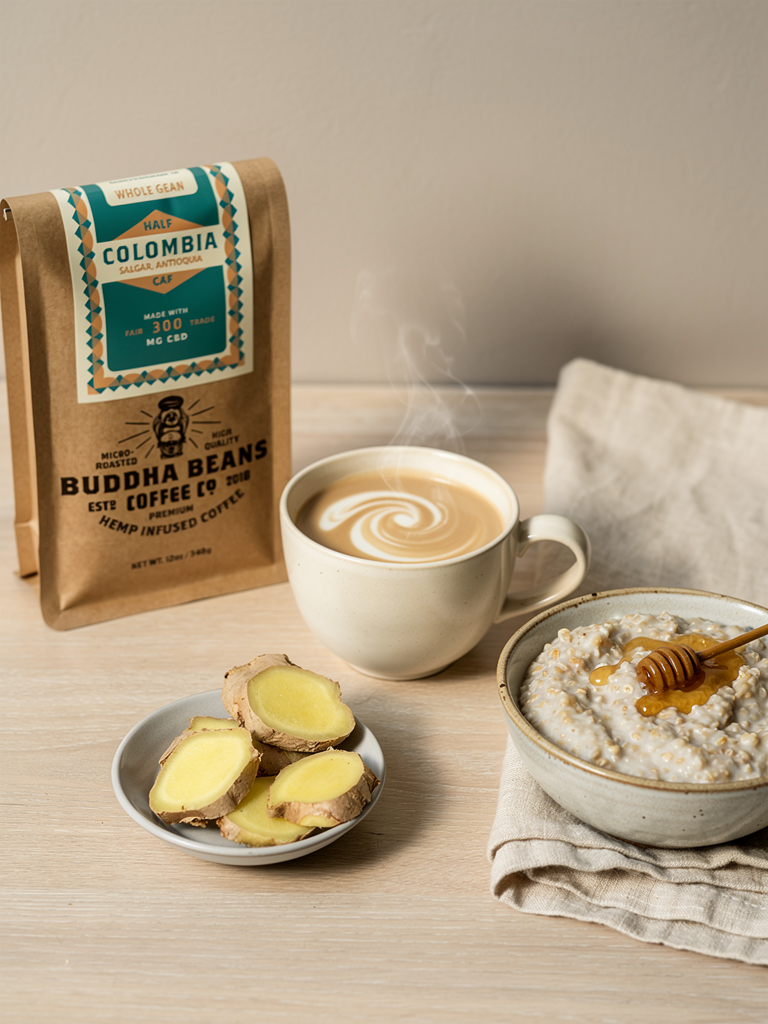
Colombia Decaf CBD Coffee: Full Flavor, Zero Caffeine Anxiety
Caffeine sensitivity often increases when gastric emptying slows. Because caffeine is processed more slowly through a GLP-1-affected gut, the stimulant effects can feel amplified or prolonged in ways that cause jitteriness, increased heart rate, or heightened nausea. For those experiencing this, our Colombia Decaf CBD Coffee is the answer.
Decaffeinated using the Swiss Water Process, which uses no chemical solvents and preserves more of the bean's natural flavor compounds, this Colombian single-origin delivers bright, clean notes of caramel and mild citrus with a full body that does not feel stripped or thin. Each serving contains 15mg of broad-spectrum CBD. You get the ritual, the warmth, the flavor, and the potential calming benefits of CBD, without the caffeine load that can interact poorly with GLP-1 side effects.
This is also an excellent option for those who want to shift their coffee consumption to later in the day without disrupting sleep, a concern for some GLP-1 users who find that nausea is worst in the morning but improves by mid-afternoon.
Practical Tips for Coffee on Semaglutide or Tirzepatide
Beyond choosing the right coffee, a few practical habits can make a significant difference in how well your morning cup sits with you while on GLP-1 therapy.
Timing Your Coffee Around Your Medication
GLP-1 injections are typically administered once weekly, and many users notice that the 24 to 72 hours following an injection are when nausea and GI symptoms peak. Paying attention to your own cycle and planning lighter, lower-acid mornings during that window can reduce the frequency of coffee-related discomfort.
Start with a Smaller Cup
Because gastric emptying is slowed, even a moderate amount of coffee may sit in your stomach longer than it previously did. Starting with 6 to 8 ounces rather than a full 12-ounce cup gives your gut more time to process without overloading it. You can always brew a second half-cup once your stomach signals it is ready.
Stay Hydrated First
GLP-1 users are at a higher risk for dehydration, both because reduced appetite often means less fluid intake and because some experience vomiting. Drinking a glass of water before your coffee helps prepare the stomach lining and dilutes any acids before they have a chance to cause irritation.
Pair with Something Light and Bland
Drinking coffee entirely on an empty stomach concentrates its acid effects. A small serving of plain crackers, a few bites of plain toast, or a spoonful of almond butter can buffer the stomach lining and make the coffee experience noticeably more comfortable. This is especially relevant in the early months of GLP-1 therapy when the body is still adjusting.
What GLP-1 Users in Los Angeles Are Saying
Los Angeles has one of the highest concentrations of GLP-1 medication users in the country, reflecting both the medication's rapid adoption nationally and the city's long culture of health-conscious living. From Silver Lake to Santa Monica, from the San Fernando Valley to Long Beach, we hear regularly from customers who found Buddha Beans after their usual coffee started causing problems on Ozempic or Wegovy.
The consistent feedback is that switching to low-acid CBD coffee made it possible to keep the morning ritual they love without the discomfort. Many Southern California customers also note that the calming quality of the CBD pairs well with the anxiety that can sometimes accompany weight-loss journeys and the lifestyle adjustments that come with GLP-1 therapy.
For a comprehensive overview of why certain coffees are easier on the digestive system regardless of medication, see our guide to the best coffee for acid reflux, which applies directly to the GLP-1 experience.
Finding the Right Cup for Your GLP-1 Journey
There is no one-size-fits-all answer to coffee on semaglutide or tirzepatide, but the evidence points clearly toward lower acid content, consistent CBD infusion, and mindful consumption habits as the most reliable path to a comfortable morning cup. Whether you are newly starting Ozempic, several months into Wegovy, or managing blood sugar with Mounjaro, your relationship with coffee does not have to become a casualty of your treatment.
Browse our full low-acid CBD coffee lineup to find the roast, origin, and caffeine level that fits your current needs. Each product page includes tasting notes, roast level, and per-cup CBD dosage so you can make an informed choice.
As always, we recommend discussing any supplement or dietary change with your prescribing physician, particularly when you are managing a chronic condition or taking prescription medications. CBD can interact with certain drugs, and your doctor is the right person to evaluate whether it is appropriate for your specific situation.
These statements have not been evaluated by the Food and Drug Administration. This product is not intended to diagnose, treat, cure, or prevent any disease.