CBD Coffee for Athletes: Pre & Post-Workout Guide
Athletes have always been at the forefront of performance culture. They experiment early, adopt fast, and demand results. Over the last few years, a growing number of runners, cyclists, weightlifters, and weekend warriors have started replacing their standard pre-workout stack with something far simpler: a well-crafted cup of CBD coffee.
If you are unfamiliar with the concept, it helps to first understand what CBD coffee is and how it differs from both regular coffee and standalone CBD products. In short, it combines the proven performance and cognitive benefits of caffeine with the balancing, anti-inflammatory properties of cannabidiol (CBD). For athletes, that combination turns out to be surprisingly relevant at multiple points in a training session.
This guide breaks down the full picture: what happens when you drink CBD coffee before, during, and after exercise, what the research actually says, and how to choose the right product for your goals.
Natural Coffee vs. Synthetic Pre-Workout
| Feature | Buddha Beans CBD Coffee | Synthetic Pre-Workout |
| Energy Source | Natural Caffeine & Antioxidants | Caffeine Anhydrous & Taurine |
| Ingredient List | Single-Origin Beans + Hemp | Dyes, Artificial Sweeteners, Fillers |
| Heart Rate | Stable / "Alert Calm" | Elevated / Tachycardia Risk |
| Recovery Aid | CBD (Anti-inflammatory) | None (Often causes "crash") |
| Flavor Profile | Artisan Chocolate/Fruit Notes | Artificial Fruit Punch / Sour Candy |
The Science Behind Coffee and Athletic Performance
Before adding CBD to the equation, it is worth establishing why coffee alone has earned such a strong reputation among athletes. Caffeine is one of the most thoroughly studied ergogenic aids in sports science. It works by blocking adenosine receptors in the brain (PMC5445139), which delays the onset of fatigue and increases the perception of effort as more manageable. The result is that athletes can push harder and sustain effort longer before hitting a wall.
A landmark body of research also supports coffee specifically, not just caffeine in isolation. According to research on coffee and fat burning, drinking coffee before exercise has been associated with a 29% increase in fat oxidation during moderate-intensity cardio. That finding has significant implications for endurance athletes and anyone focused on body composition. The polyphenols and chlorogenic acids found naturally in coffee appear to amplify the metabolic effects of caffeine in ways that synthetic caffeine supplements do not replicate.
Studies published in the Journal of Applied Physiology and the British Journal of Sports Science have consistently shown that caffeine improves time-to-exhaustion in endurance sports, enhances anaerobic power output in sprint disciplines, and reduces perceived exertion across nearly every modality of exercise. For most athletes, a dose of 3 to 6 milligrams of caffeine per kilogram of body weight consumed 30 to 60 minutes before training is considered the performance sweet spot.
Where CBD Fits Into the Athletic Picture
CBD interacts with the body through the endocannabinoid system (ECS), a regulatory network that plays a role in inflammation, pain signaling, mood, sleep, and recovery. Unlike THC, CBD is non-psychoactive, meaning it produces no intoxicating effect. The World Anti-Doping Agency (WADA) removed CBD from its prohibited substances list in 2018, making it a legal option for competitive athletes at virtually every level.
For CBD coffee exercise applications, the interest centers on a few key mechanisms:
Anti-Inflammatory Effects
Intense exercise creates micro-damage in muscle tissue, which triggers an inflammatory response. That inflammation is necessary for adaptation and growth, but excessive or prolonged inflammation contributes to soreness, stiffness, and delayed recovery. Research suggests CBD may help modulate this inflammatory response by interacting with CB2 receptors and reducing the activity of pro-inflammatory cytokines, potentially helping athletes recover faster between sessions.
Cortisol and the Stress Response
One of the persistent criticisms of high-dose caffeine as a pre-workout tool is its tendency to spike cortisol, the body's primary stress hormone. Elevated cortisol before or during training is generally fine, but chronically elevated cortisol from stacking caffeine-heavy supplements throughout the day can interfere with sleep, muscle repair, and hormonal balance. Early research suggests CBD may help buffer the cortisol response, making the combination of caffeine and CBD a more balanced physiological proposition than caffeine alone.
Anxiolytic Effects Without Sedation
CBD has demonstrated anxiolytic (anxiety-reducing) properties in multiple human trials, including a well-cited 2019 study in The Permanente Journal (Shannon 2019) where 79% of participants reported reduced anxiety after CBD supplementation. For athletes who experience pre-competition jitters or performance anxiety, this effect has practical value. The key is that CBD does not sedate; it modulates anxiety without impairing alertness or reaction time, making it compatible with the sharpness athletes need before training.
CBD Coffee as a Pre-Workout Tool
The conversation around using CBD coffee as a pre-workout often surprises athletes who have been relying on powder-based supplements for years. The appeal of pre-workout powders is understandable: they are precisely dosed, convenient, and aggressively marketed with science-forward branding. But many of them also contain ingredient lists that read like chemistry experiments, with beta-alanine, synephrine, niacin flushes, and stimulant blends that leave users feeling jittery, itchy, or wired past midnight.
CBD coffee offers a cleaner entry point. A well-roasted single-origin coffee delivers natural caffeine alongside antioxidants, while the CBD component adds a layer of calm focus that can actually improve training quality. Athletes in the Venice Beach fitness community who have made the switch often describe it as "dialed in without the edge" -- a state of alert focus without the overstimulation that disrupts technique and increases injury risk.
For a direct comparison of the two approaches, the breakdown in CBD coffee vs high-stimulant pre-workout powders is worth reading. The summary is that CBD coffee tends to be better suited for athletes whose training demands technical precision, sustained effort over 60-plus minutes, or a nervous system that is already under significant daily stress from work, family, or life in a demanding city like LA.
Optimal Pre-Workout Protocol
For athletes looking to use CBD coffee before training, the general recommendations are straightforward. Drink your cup 30 to 45 minutes before your session. Choose a medium roast for maximum caffeine retention, as lighter roasts tend to have slightly higher caffeine content by volume. If you are sensitive to caffeine, start with a lower-CBD-concentration option and assess your response before moving to a higher-potency product. Pair your coffee with a small carbohydrate-and-protein snack if training within 90 minutes of waking, since glycogen stores are depleted overnight.
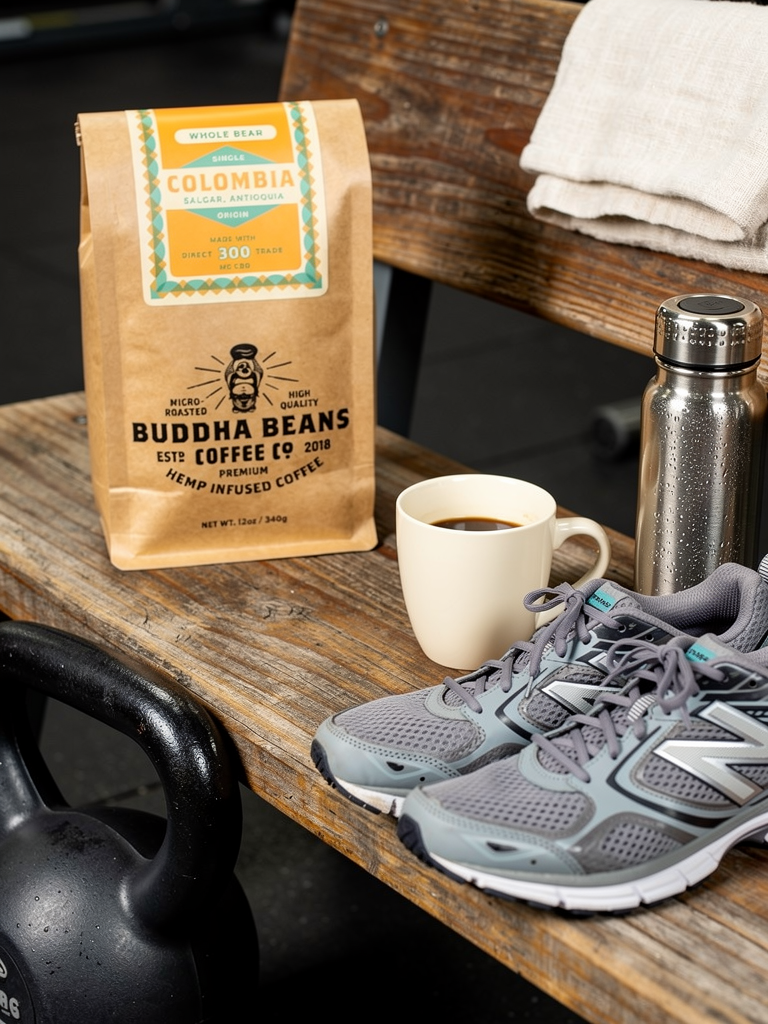
Our Colombia CBD Coffee is a strong starting point for athletes new to the category. It is sourced from high-altitude Colombian farms, which produce beans with a naturally balanced cup profile, and it delivers a consistent, moderate caffeine load alongside a well-calibrated CBD dose that supports focus without overpowering the caffeine.
CBD Coffee Post-Workout Recovery: Where the Real Case Gets Made
If the pre-workout use case is compelling, the post-workout application is where CBD coffee athletes in the know tend to get most enthusiastic. Recovery is where adaptation actually happens, and anything that supports the recovery process has a direct multiplying effect on long-term performance gains.
The full breakdown of CBD coffee for post-workout recovery covers the mechanisms in detail, but the core argument is this: the anti-inflammatory and analgesic properties of CBD can meaningfully support muscle repair, reduce delayed onset muscle soreness (DOMS), and support the quality of sleep that follows intense training, the period during which growth hormone is released and the most significant tissue repair occurs.
The timing question for post-workout coffee is one that athletes reasonably raise. Will caffeine after training interfere with sleep? The answer depends on the individual's caffeine metabolism, which is largely genetic, and the time of day the training session ends. For morning and early afternoon athletes, a post-workout CBD coffee is generally well-tolerated. For evening athletes or those with caffeine sensitivity, a lower-caffeine option or a CBD-only product may serve the recovery goal better.
DOMS and the Anti-Inflammatory Pathway
Delayed onset muscle soreness peaks 24 to 72 hours after eccentric exercise, such as heavy squats, downhill running, or plyometric training. The inflammatory cascade that drives DOMS involves the same cytokines and signaling pathways that CBD has been shown to modulate. While no large-scale clinical trials have yet established definitive dosing guidelines for CBD and DOMS specifically, the mechanistic evidence is sound, and anecdotal reports from competitive athletes are consistently positive. In the recovery-obsessed training culture of Los Angeles, where athletes from Santa Monica to Silver Lake are tracking HRV scores and sleep stages, CBD coffee has become part of the recovery toolkit alongside ice baths, foam rolling, and targeted nutrition.
Choosing the Right CBD Coffee for Athletic Goals
Not all CBD coffee products are created equal, and athletes who want to take this seriously should apply the same scrutiny they bring to any supplement purchase. Third-party lab testing, clear CBD concentration labeling, and high-quality source coffee are the three non-negotiables.
At Buddha Beans Coffee Co., every product in our lineup is built on specialty-grade beans and third-party tested CBD. For athletes who want maximum potency, the Black Label Colombian 600mg CBD is our highest-concentration offering. It is designed for athletes with higher body weight, those engaged in high-volume training blocks, or individuals who have already established a baseline CBD response and need more to achieve the same effect. The 600mg total CBD per bag translates to a meaningful dose per serving that is relevant for genuine recovery and anti-inflammatory support.
For those who want to explore the full range of options, browse our CBD coffee collection to find the concentration and roast profile that fits your training phase, body weight, and caffeine tolerance.
Practical Considerations for Competitive Athletes
A few practical notes for athletes competing under anti-doping frameworks. CBD itself is WADA-compliant and legal for competitive use. However, athletes should be aware that some CBD products may contain trace amounts of THC, which is still prohibited. Look for products with a Certificate of Analysis (COA) that confirms THC content below the 0.3% legal threshold, and ideally confirm the CBD was derived from hemp rather than marijuana strains. Athletes competing in sports governed by the United States Anti-Doping Agency (USADA) should consult USADA's high-risk supplement guidelines and verify third-party certification before adding any supplement to their protocol.
Hydration and CBD Coffee
One common concern about using coffee around training is its mild diuretic effect. In practice, studies have shown that habitual coffee drinkers experience minimal net fluid loss from moderate caffeine consumption, and the water content of the coffee itself largely offsets the diuretic response. That said, athletes training in hot environments like outdoor in July should still prioritize consistent hydration throughout the day and not rely on coffee as a primary fluid source.
What This Means for Athletes
CBD coffee athletes are not chasing a trend. They are responding to a genuinely coherent performance proposition: a beverage that delivers the well-documented ergogenic benefits of caffeine, the fat-oxidizing effects of coffee polyphenols, and the anti-inflammatory and anxiolytic properties of CBD; all in a single, clean, whole-food-adjacent format.
Whether your goal is a faster 5K on the Santa Monica beach path, a better back squat in your Culver City gym, or simply more consistent recovery between training days, the case for CBD coffee exercise support is strong enough to be worth exploring. Start with a clear goal, choose a quality product with transparent lab testing, and give yourself a few weeks to assess the full effect. Like most performance tools, the results compound over time.
The athletes who are already ahead of this curve are not relying on marketing claims. They are reading the research, talking to coaches, and tracking their own results. Now you have the framework to do the same.
These statements have not been evaluated by the Food and Drug Administration. This product is not intended to diagnose, treat, cure, or prevent any disease.