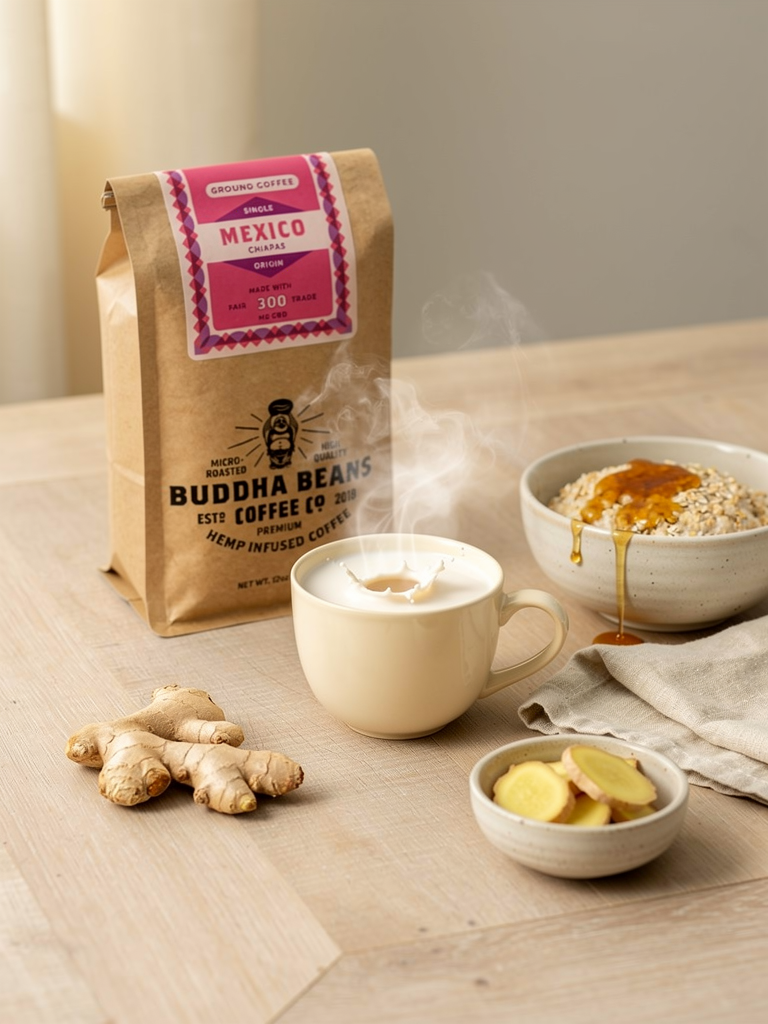
Why Mexican Coffee is Low in Acidity
It might seem counterintuitive in the world of specialty coffee, but many coffee lovers actively seek out Mexican beans for precisely what they *don't* have: a sharp bite. Mexican coffee is prized for being exceptionally smooth, mellow, and low in acidity, especially when contrasted with the bright, fruity profiles often found in neighboring regions like Guatemala or countries in East Africa.
While high elevation is typically synonymous with vibrant, high acidity, several key factors work in harmony across Mexico to create this distinctively gentle and comforting cup profile. Here is an exploration of the elements, from growing practices to processing and roasting, that define the smooth character of Mexican coffee.
The Power of Shade-Grown Cultivation
Perhaps the most significant contributor to the smoothness of Mexican coffee is the widespread use of traditional shade-grown cultivation. In this system, often referred to as a poly-culture or agroforestry system, coffee plants are grown under a dense canopy of diverse, native trees rather than in open, sun-drenched fields.
How does this affect acidity? The tree canopy acts as a natural shield against direct, intense sunlight, effectively lowering the ambient temperature for the coffee plants. This cooler environment causes the coffee cherries to ripen much more slowly. This prolonged ripening period allows the complex sugars within the bean to develop more fully and deeply. These developed sugars serve to mellow out the sharp organic acids (like citric and malic acid) that are naturally present in the green bean. When these beans are roasted, the result is a cup characterized by a richer sweetness often highlighting notes of chocolate, caramel, and nuts and a noticeably softer, less "bright" acidity.
The "Washed" Processing Profile
The method used to process coffee after harvest has a profound impact on the final flavors in your cup, and acidity is no exception. The vast majority of specialty coffee produced in Mexico utilizes the washed (or wet-processing) method.
In the washed process, the fruit (the pulp and mucilage) is completely removed from the bean immediately after harvesting and *before* the bean is dried. This is typically achieved using mechanical depulpers followed by time in fermentation tanks to break down any remaining fruit residue. This process is crucial because washed processing is known for creating an extremely clean and consistent cup.
While the washed process can sometimes *highlight* inherent acidity in some regions, in the context of Mexico's shade-grown beans, it acts as a refinement tool. It helps to strip away any unpredictable, wild, or fermented flavors that can sometimes introduce a perceived tang or harshness. Consequently, the washed process leaves a clean canvas that accentuates the bean's natural smoothness and inherent sweet, nutty characteristics, completely free from distractingly fruity, tart, or sharp overtones.
The Tradition of Medium-Dark Roasting
While not a variable of the growing environment, roasting plays an undeniable role in how we perceive acidity in the final brewed coffee. Historically, Mexican coffee has very often been roasted to a medium-dark or dark level. This tradition is so deeply ingrained that "Mexican Roast" actually became a colloquial term within some segments of the coffee industry to describe a deep, dark roast.
Roasting is fundamentally a process of thermal degradation, where heat breaks down the chemical compounds within the green bean (Yeretzian, PMC). The organic acids that produce that sought-after "brightness" are particularly susceptible to this heat. As coffee is roasted longer and darker, these acids are increasingly destroyed, while the body of the coffee intensifies and caramelization (the development of rich sweetness) takes over. When you combine an inherently low-acid, shade-grown bean with a darker roast profile, the resulting perceived acidity becomes minimal. Instead of sharp fruitiness, you get a full-bodied, bold, and incredibly smooth cup with prominent notes of dark chocolate and roasted nuts.
Reinterpreting "High" Elevation in Mexico
There is a commonly accepted maxim in coffee that high elevation equals high acidity. This is generally true; coffee grown at extreme altitudes (e.g., above 1,500 meters) matures very slowly, which helps it retain more of those complex, bright, and fruity acids.
However, the concept of "high altitude" is relative and must be understood in context. While prominent Mexican growing regions like Chiapas and Oaxaca boast impressive mountain ranges that reach significant heights, a substantial portion of the coffee produced for both commercial and mainstream specialty use in Mexico is grown at what are considered medium-high altitudes (roughly 900 to 1,300 meters).
At these specific elevations, the overall climate is generally warmer than at extremely high altitudes, and the coffee cherries mature relatively faster. This faster maturation rate results in fewer organic acids being retained within the bean compared to coffees grown at 1,700 or 1,800 meters. This inherently creates a mellow baseline profile. Beans from these elevations naturally tend toward milder flavors and less pronounced brightness from the start, setting the perfect stage for the final smooth profile that is further amplified by shade-growing, washed processing, and dark roasting.
The Perfect Balance
Mexican coffee achieves its legendary smoothness not by defying the principles of coffee science, but through a complex and harmonious interaction of factors. It is not low-acid *despite* its elevation, but rather *because* a specific, centuries-old combination of medium-high altitudes, extensive shading, careful washed processing, and a tradition of deeper roasting all work in unison to mute sharpness and maximize a gentle, sweet, and comforting smoothness.
Buy our CBD infused Organic Mexican Coffee Beans or non-infused Organic Mexican coffee bean here!
Shop CBD Coffee
Keep Reading